ERP Governance Model: Roles, Decision Rights & How Real Projects Stay Aligned
ERP implementations don’t fail because of technology.
They fail because governance is weak, decision rights are unclear, and teams drift in parallel without realizing it. Strong governance is what turns a complex ERP program into a predictable, manageable system.
This guide covers the structures, routines, and accountability mechanisms that keep ERP projects aligned from design to go-live.
1) Governance Exists to Reduce Ambiguity, Not Slow Things Down
Most teams assume governance is bureaucracy.
In reality, governance reduces noise and creates clarity: who decides, how fast, and based on what criteria.
Without it, every meeting becomes a negotiation — and scope, design, and timelines shift without control.
What to do: define how decisions are made before the project starts. Make roles explicit and map decision categories to actual owners.
Related post:
https://www.fitgapfinance.com/roles-responsibilities-in-an-erp-implementation-project/
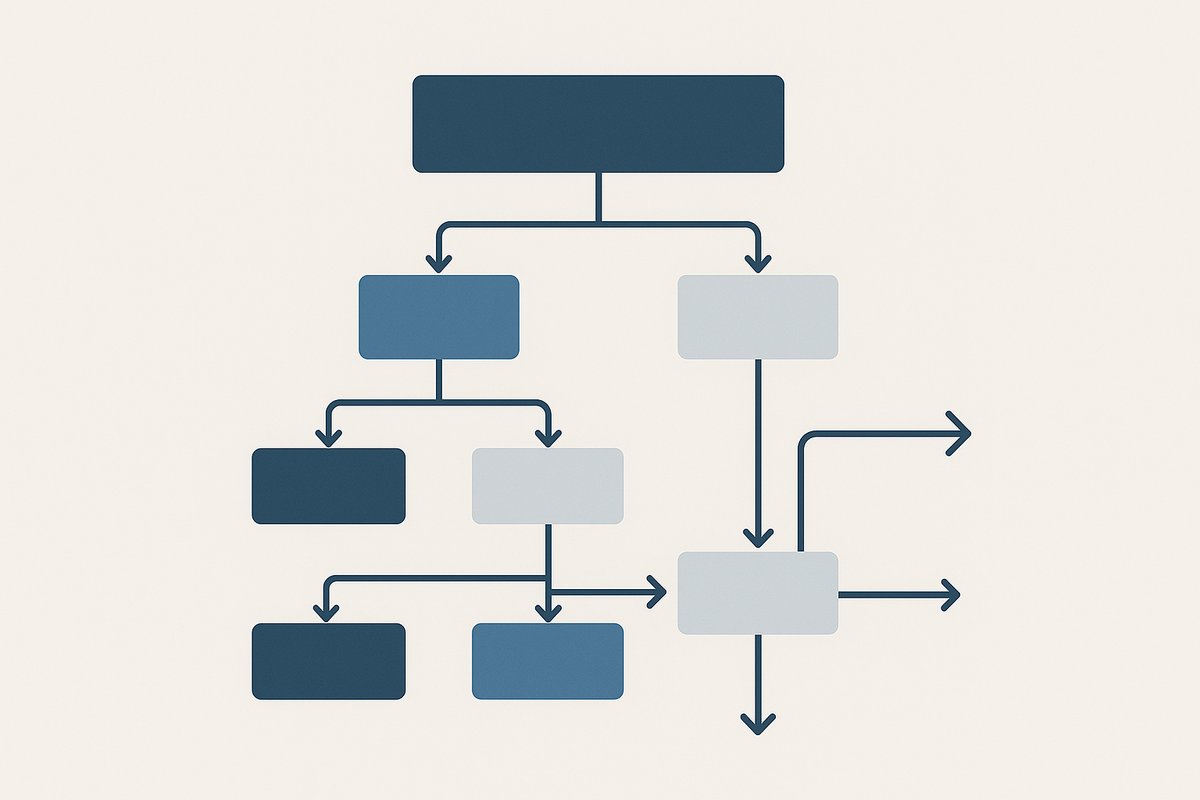
2) The Governance Triangle: Steering Committee, Project Board & Working Teams
A well-run program has three governance layers:
1. Steering Committee
Sets direction, approves scope, validates risks, and resolves escalations.
2. Project Board / PMO
Owns delivery, tracks risks, aligns IT & business, manages vendors.
3. Working Teams
Design, test, validate, reconcile, migrate, secure, and document.
When any layer is missing (or blurred), the project loses rhythm.
What to do: publish a simple 1-page governance map. Each group must have a mandate, cadence, and membership list.
Related post:
https://www.fitgapfinance.com/human-side-erp-projects/
3) Decision Rights Must Be Written, Not Assumed
ERP programs fail when people believe they have decision rights they don’t actually have — or when no one is empowered to decide at all.
Documenting decision rights removes 80% of ambiguity.
Typical categories include:
- process decisions
- data decisions
- reporting decisions
- security & access decisions
- scope decisions
- environment/testing decisions
What to do:
Use a DACI or RACI to make decision rights visible. One owner per decision — and that person must understand the consequences.
Related post:
https://www.fitgapfinance.com/erp-implementation-environment-strategy/
4) Change Control Is the Backbone of Good Governance
Change requests aren’t bad — unmanaged change is.
A healthy CR process protects:
- scope
- budget
- timeline
- testing load
- data migration
- training obligations
What to do:
Enforce a simple pipeline:
Request → Impact → Recommendation → Decision → Communication
No CR, no work. Weekly CR reviews keep the project stable.
Related post:
https://www.fitgapfinance.com/d365-finance-license-optimization-tips/
5) Governance Must Protect the MVP (Minimum Viable Product)
The #1 governance failure is trying to keep everything in scope.
Strong governance is not about saying “yes” — it's about protecting what matters.
What to do:
Define the MVP early and revisit it every phase.
If a change threatens the MVP, push it to post-go-live without guilt.
Related post:
https://www.fitgapfinance.com/real-life-erp-implementation-lessons/
6) Risk & Issue Management Must Be Ruthless, Visible, and Quantified
ERP risks don’t disappear — they grow quietly until they explode during testing or cutover.
The PMO must track:
- functional gaps
- environment delays
- data quality issues
- security dependencies
- parallel systems
- vendor performance
- integrations readiness
Use a heat map to visualize trends, not just individual risks
A weekly risk heat map helps leadership see:
- probability vs. impact
- whether risks are trending up or down
- which workstreams are destabilizing (data, integrations, security, testing)
- where to allocate resources
- which risks require escalation
Heat maps expose patterns that written logs miss — and prevent “we didn’t know” moments.
What to do:
Maintain a weekly red list and a visual heat map shared with all teams.
Escalate early, not late, and assign a single owner per risk.
Related post:
https://www.fitgapfinance.com/erp-best-practices-nuance-d365-finance/
7) Governance Must Extend to Environments, Data, Security & Change Management
Real governance covers all critical delivery lanes:
Environment governance
Refresh cycles, code promotion, testing paths.
Data governance
Migration waves, reconciliation owners, cutover readiness.
Related post:
https://www.fitgapfinance.com/data-migration-in-dynamics-365-how-to-avoid-the-most-costly-mistakes/
Security governance
Role design, segregation of duties, access requests, stabilization.
Related post:
https://www.fitgapfinance.com/erp-security-roles-d365-finance-governance-approach/
Reporting governance
Define what truly needs to exist at go-live.
Change management governance
Change management must be governed as strictly as design and testing.
It requires:
- stakeholder alignment
- communication rhythm
- training readiness
- adoption risk tracking
- feedback loops
- business readiness metrics
What to do:
Assign explicit owners to environments, data, security, reporting, and change management — not vague teams.
8) Good Governance Also Manages Culture: Collaboration Over Chaos
ERP projects fail more from behaviour than configuration.
Common cultural risks:
- finger-pointing
- vendor vs. client conflict
- IT vs. business tension
- hidden issues
- passive resistance
- disengaged SMEs
Strong governance includes behavioural expectations.
What to do:
Create a collaboration charter early:
- issues raised early
- no blame-led discussions
- respectful escalation
- vendor treated as a partner
- toxic behaviours addressed immediately
Related post:
https://www.fitgapfinance.com/human-side-erp-projects/
9) Transparency Is a Governance Superpower
ERP programs collapse when information is siloed or filtered.
Successful teams share:
- risks
- blockers
- CR status
- testing progress
- data readiness
- security adjustments
- stabilization metrics
What to do:
Use a shared dashboard visible to business, IT, and vendors.
10) Governance Outlives the Project
After go-live, governance becomes operational:
- change advisory board
- data maintenance rules
- access reviews
- reporting upkeep
- enhancement backlog
Programs deliver systems.
Governance protects them.
What to do:
Define post-go-live governance before go-live.
Field-Proven Checkpoints
- Governance layers with clear cadence
- Decision rights documented and visible
- CR pipeline enforced weekly
- MVP protected fiercely
- Environments, data, security & change management owned
- Collaboration charter enforced
- Heat map used weekly for risk visibility
- Risks surfaced early, not late
Closing Thought
Technology delivers capability.
Governance delivers predictability.
If you want an ERP project to succeed, build governance that protects clarity, alignment, culture, and decision-making long before configuration begins.
For a broader perspective on governance, human dynamics, and accountability in ERP initiatives, see our ERP transformation practical guide.
👉https://www.fitgapfinance.com/erp-transformation-practical-guide/
Lire en français:
© FitGap Finance — All rights reserved